From Heritage to Contemporary Dining
FENG Full marks the first restaurant venture by Lao Ding Feng, a time-honored pastry brand expanding into contemporary dining. Drawing from its Northeastern root, Feng Full positions itself as an allday food bar offering a wholesome yet modern menu from lunch through dinner and into a cocktail-driven night setting. Office AIO sought to translate the underlying characters of Northeastern culture into spatial forms, an exploration between familiarity and reinvention, restraint and expression.
A Familiar Framework, Reconsidered
Rather than leaning into nostalgia, Office AIO’s approach was not to reconstruct a direct cultural image, but to work from the celebrated social qualities of the northeastern region— warmth, generosity, directness, and a great sense of humour — and translate them into a spatial language that feels domestic yet unapologetically contemporary.
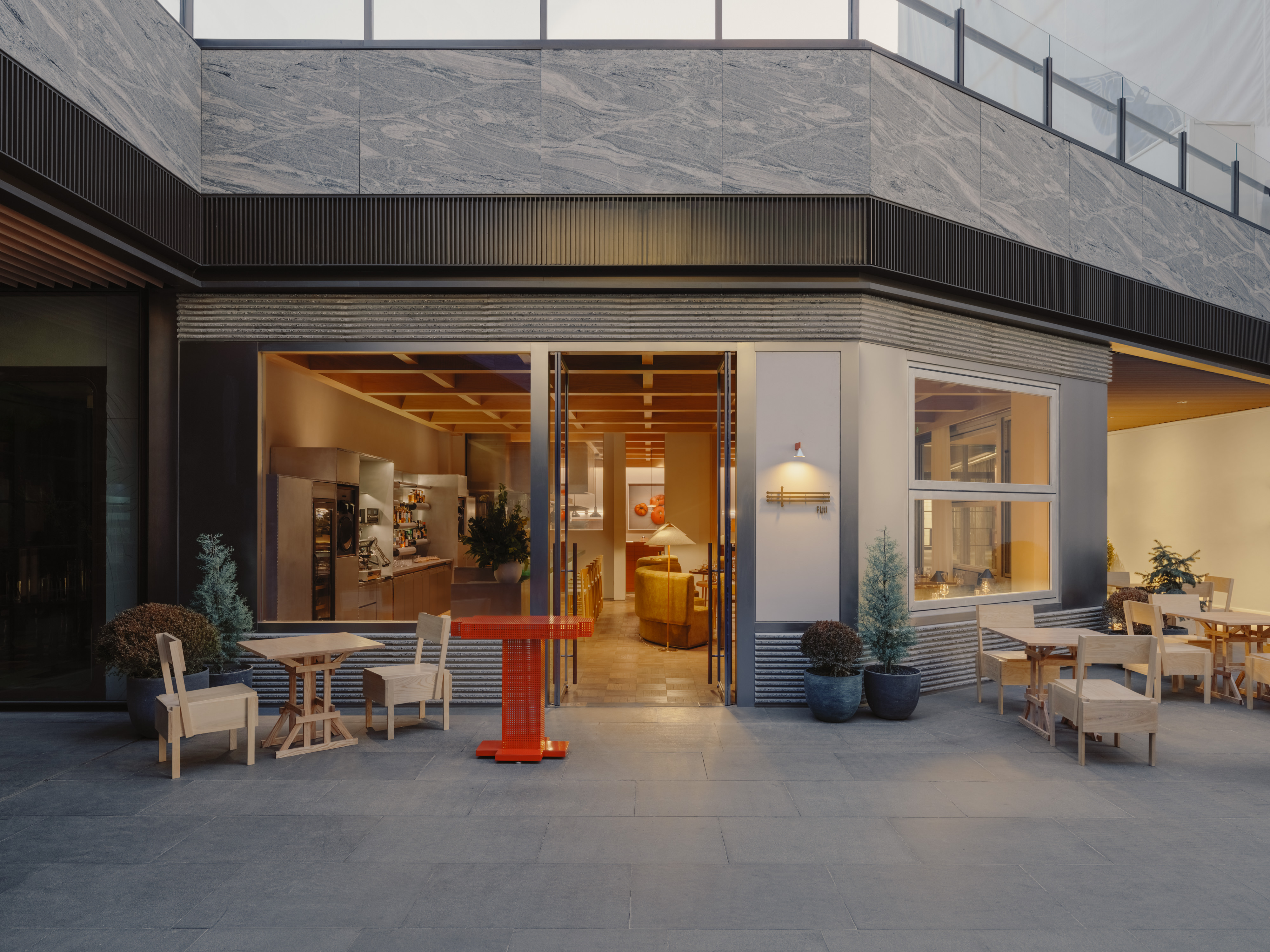
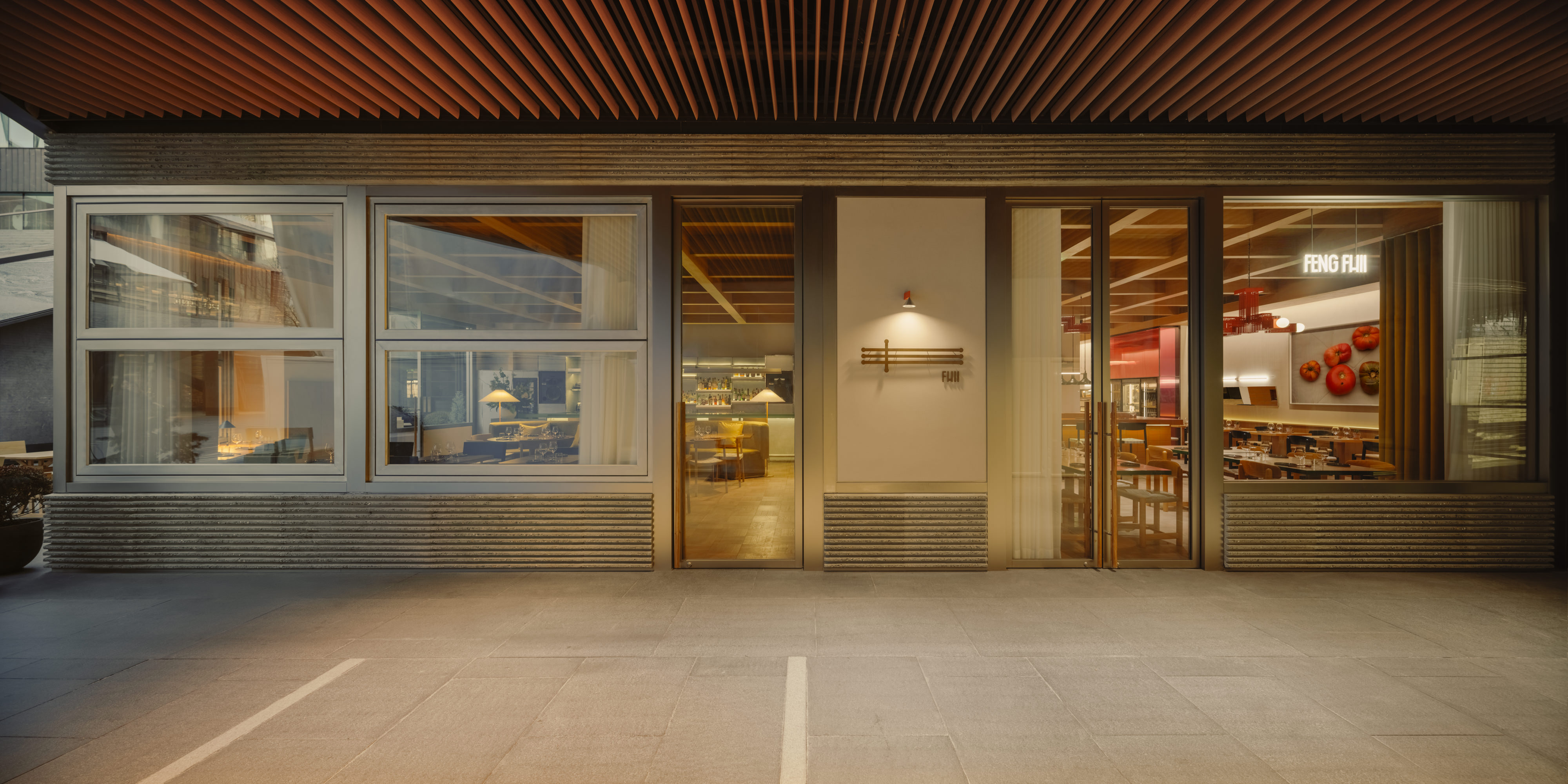
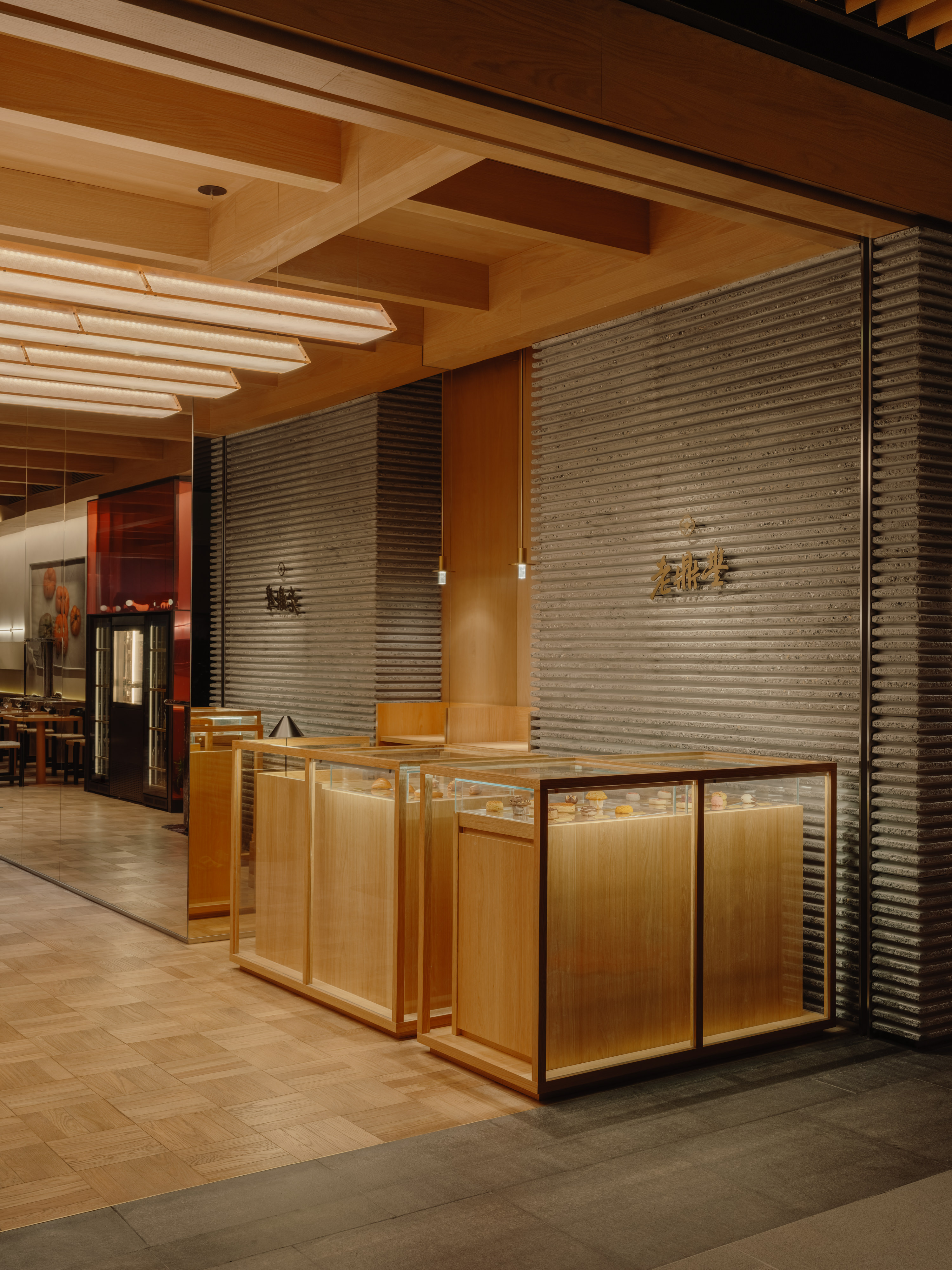
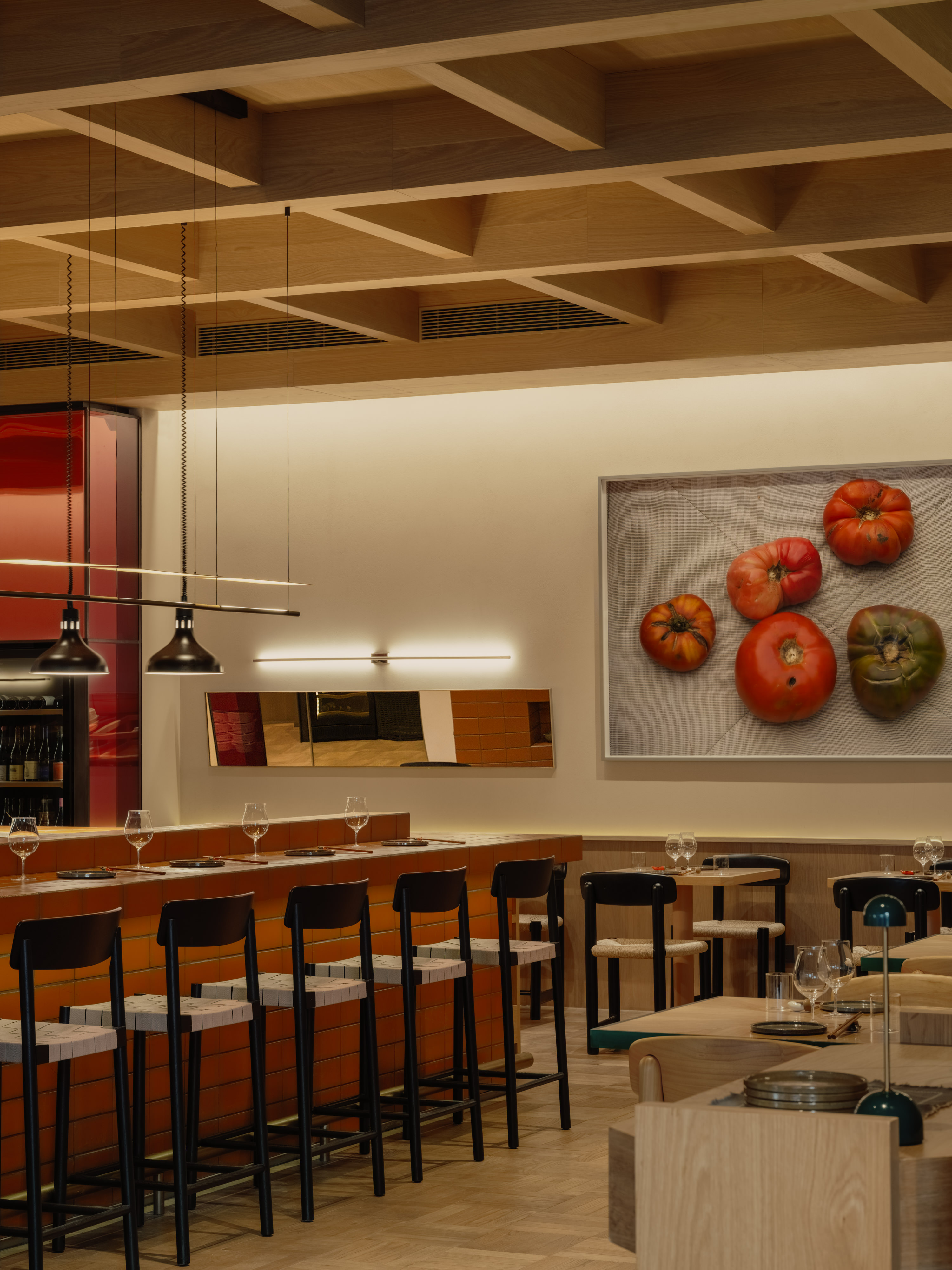
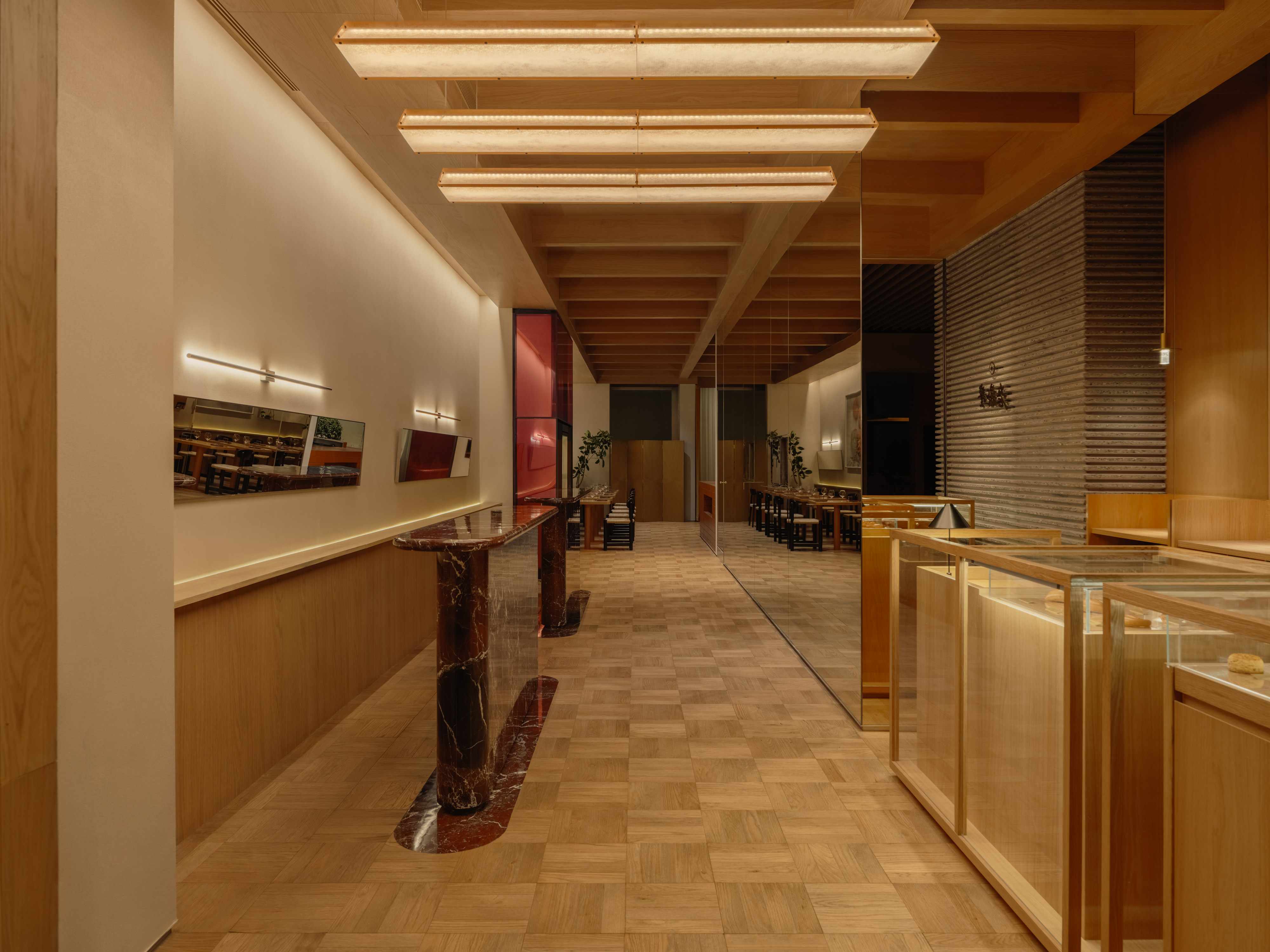
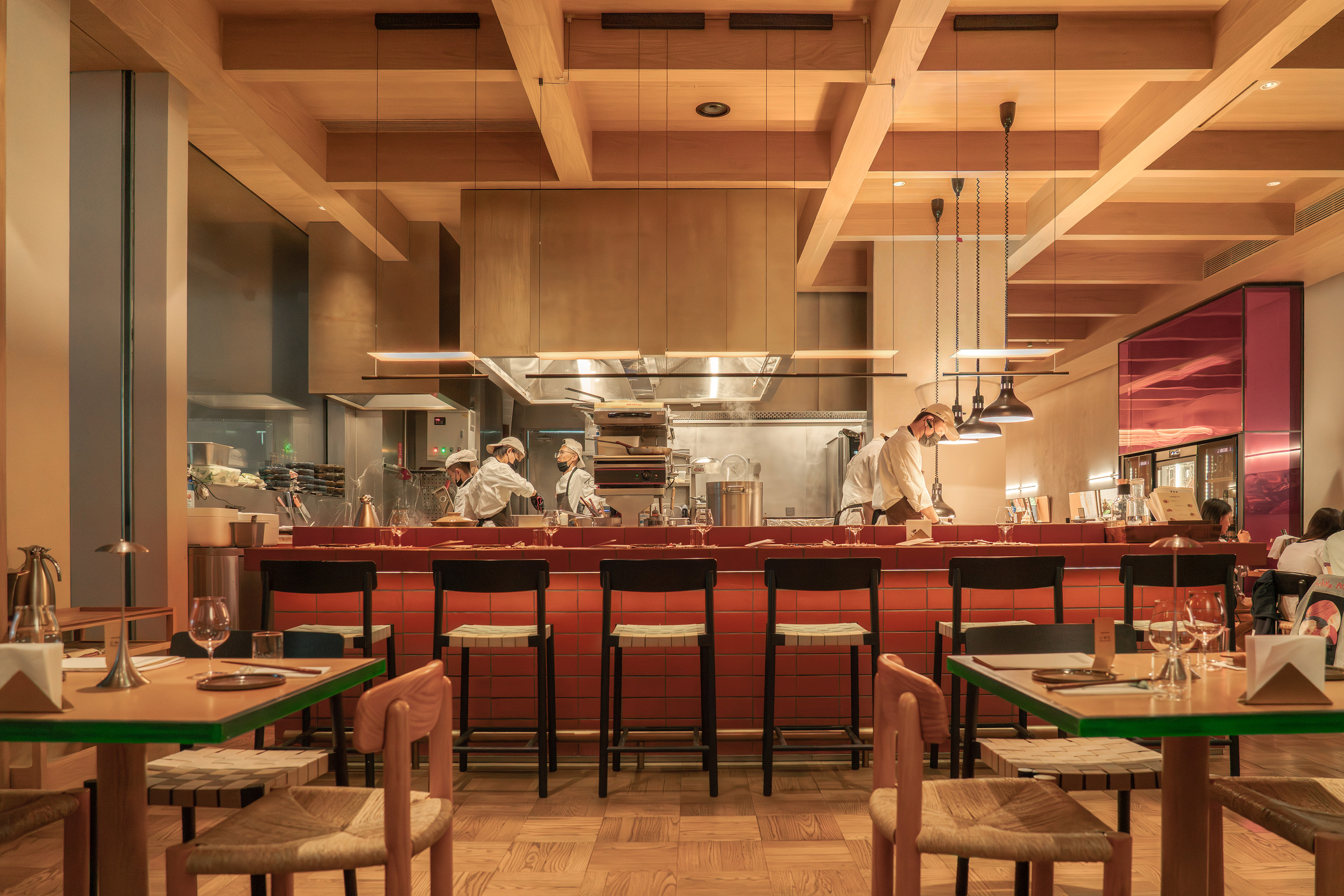
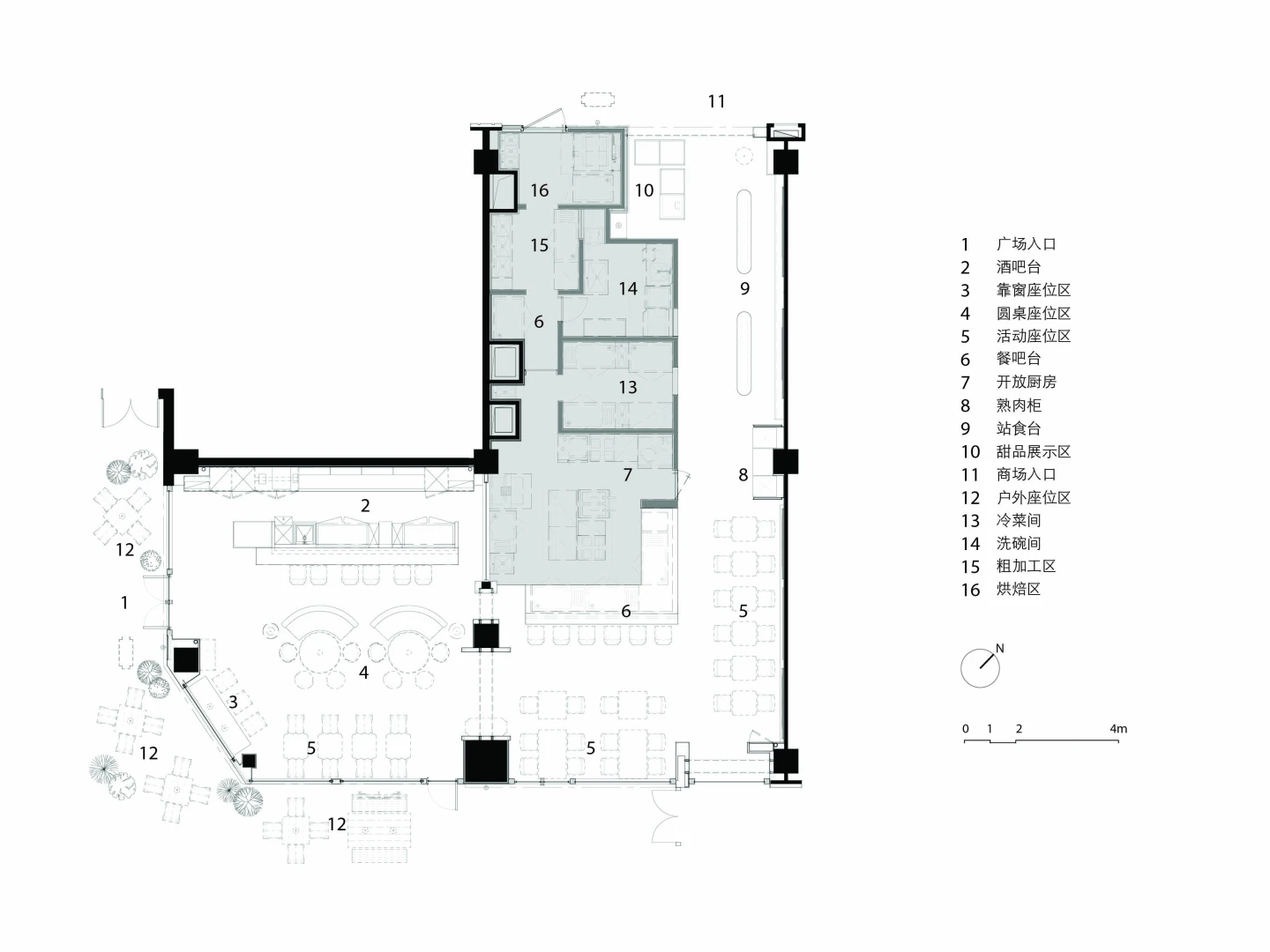
Located at a prominent corner in a sunken plaza of an outdoor mall, the L-shaped site was fragmented by structural elements and multiple mandatory access points. In response to these restraints, the design took charge of the restaurant’s programme allocation. A series of open counters dictate the operation, forming a backbone that strings all the critical moments together and reconnects in the interior. From the dessert counter holding fort at the mall entrance, to the large dining counter showcasing the open kitchen around the bend, to the linear cocktail counter servicing the huge flux of customers coming from the sunken plaza, each creates visual depth across the space. Rather than separating programmes by time of day, the layout allows atmosphere to shift naturally - from casual daytime dining to animated social scenes during the night.
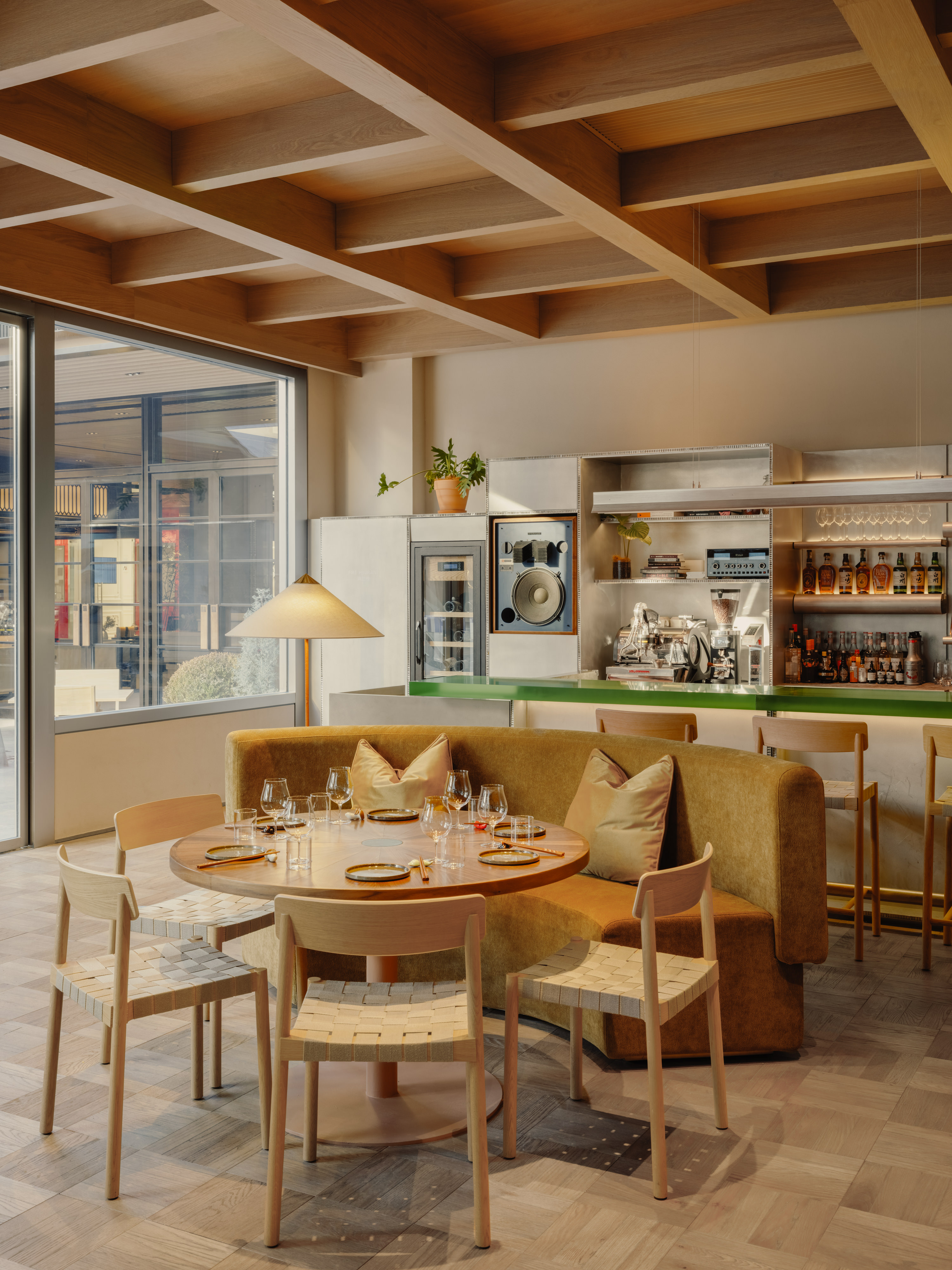
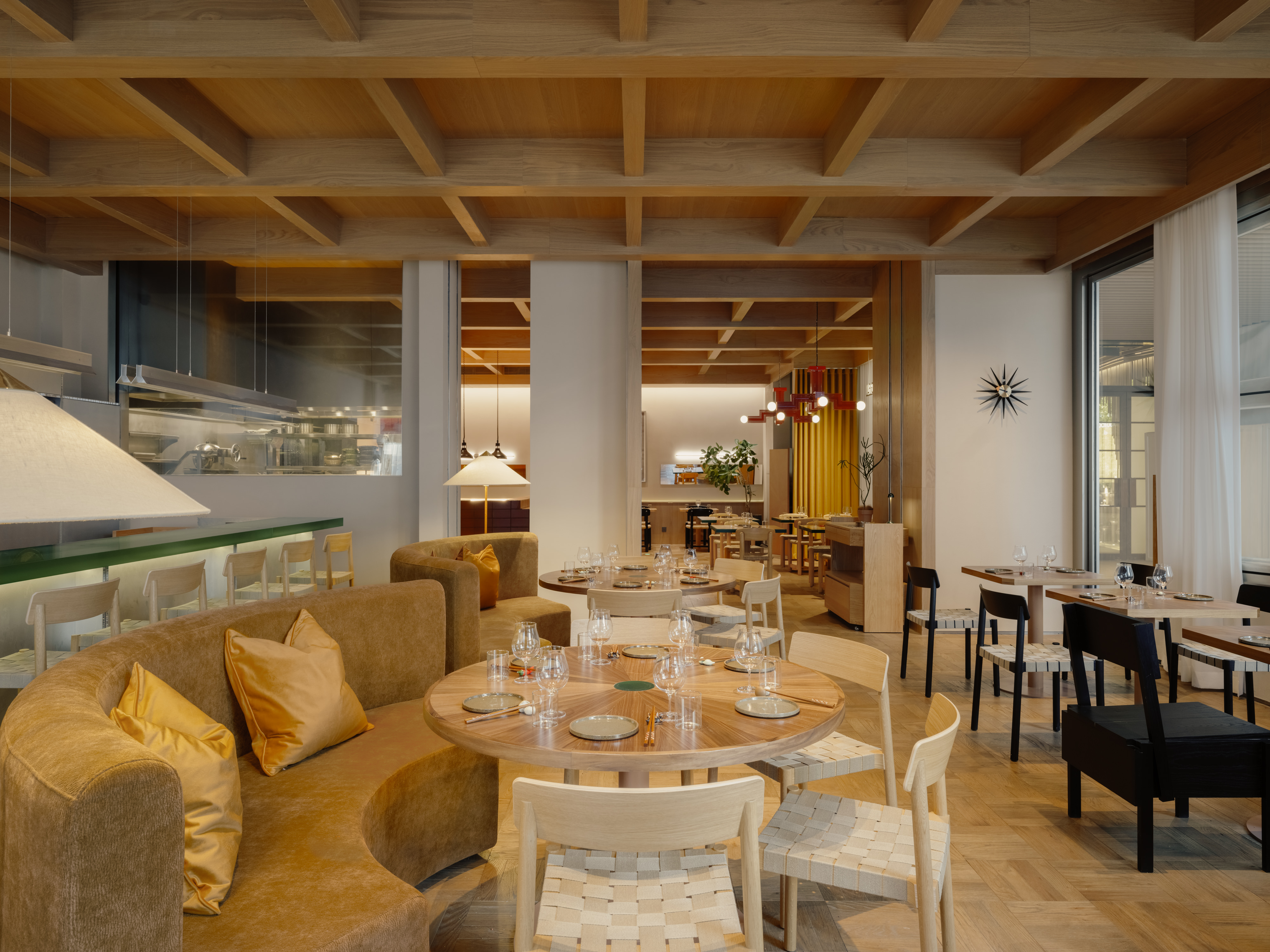
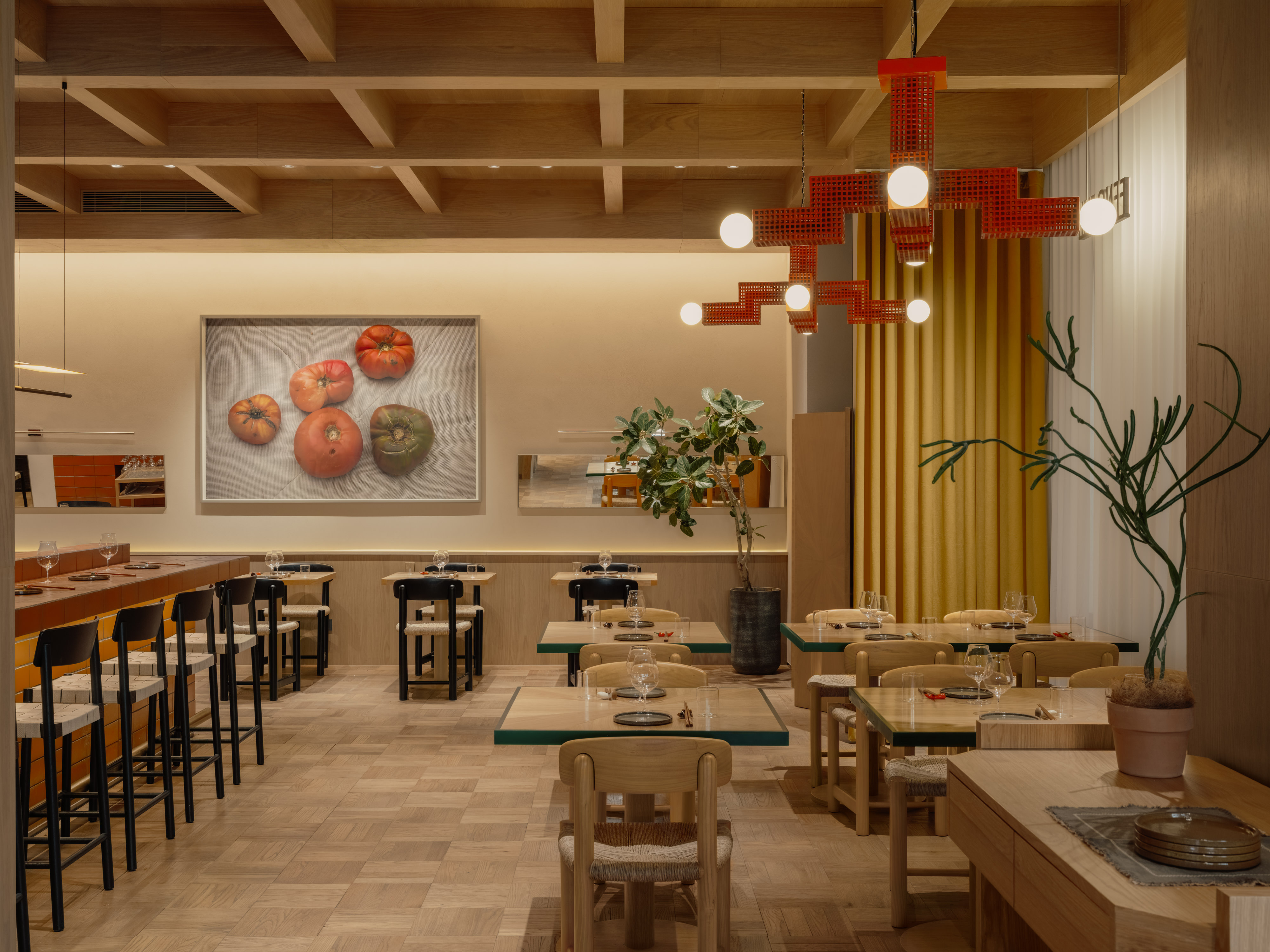
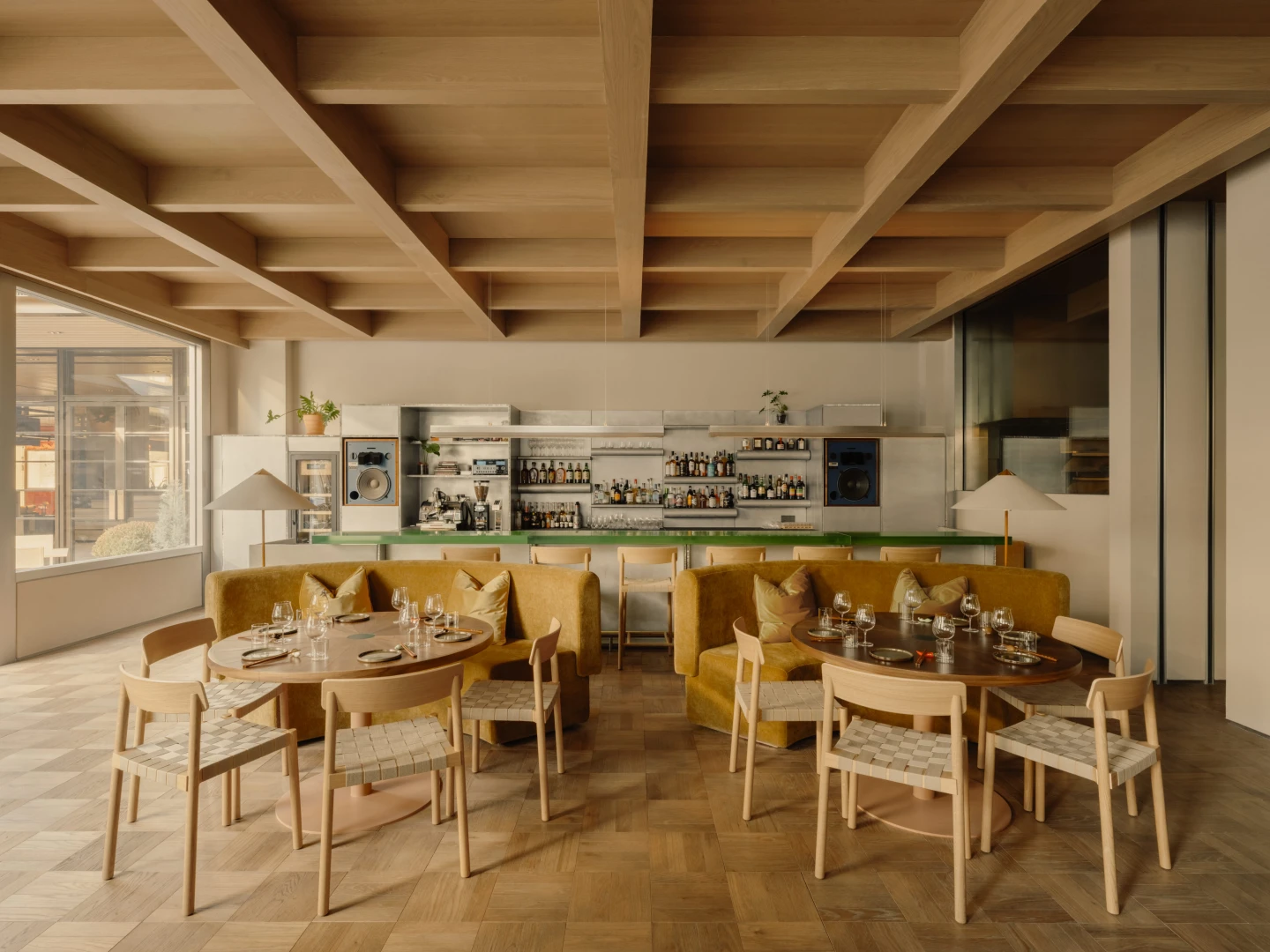
Within this framework, the interior establishes a deliberately familiar base. A coffered ceiling, chequered parquet flooring, and a clay-tiled open kitchen bar to introduce the visual rhythm and materiality associated with everyday interiors, evoking the warmth of home rather than the spectacles of a themed restaurant. This domestic sensibility is intentionally set against the fluted cast concrete façade, a near-brutalist expression framing the interior with an absolute and contemporary presence. The tension between these conditions defines the project’s character: grounded, but never passive.
Objects in Dialogue
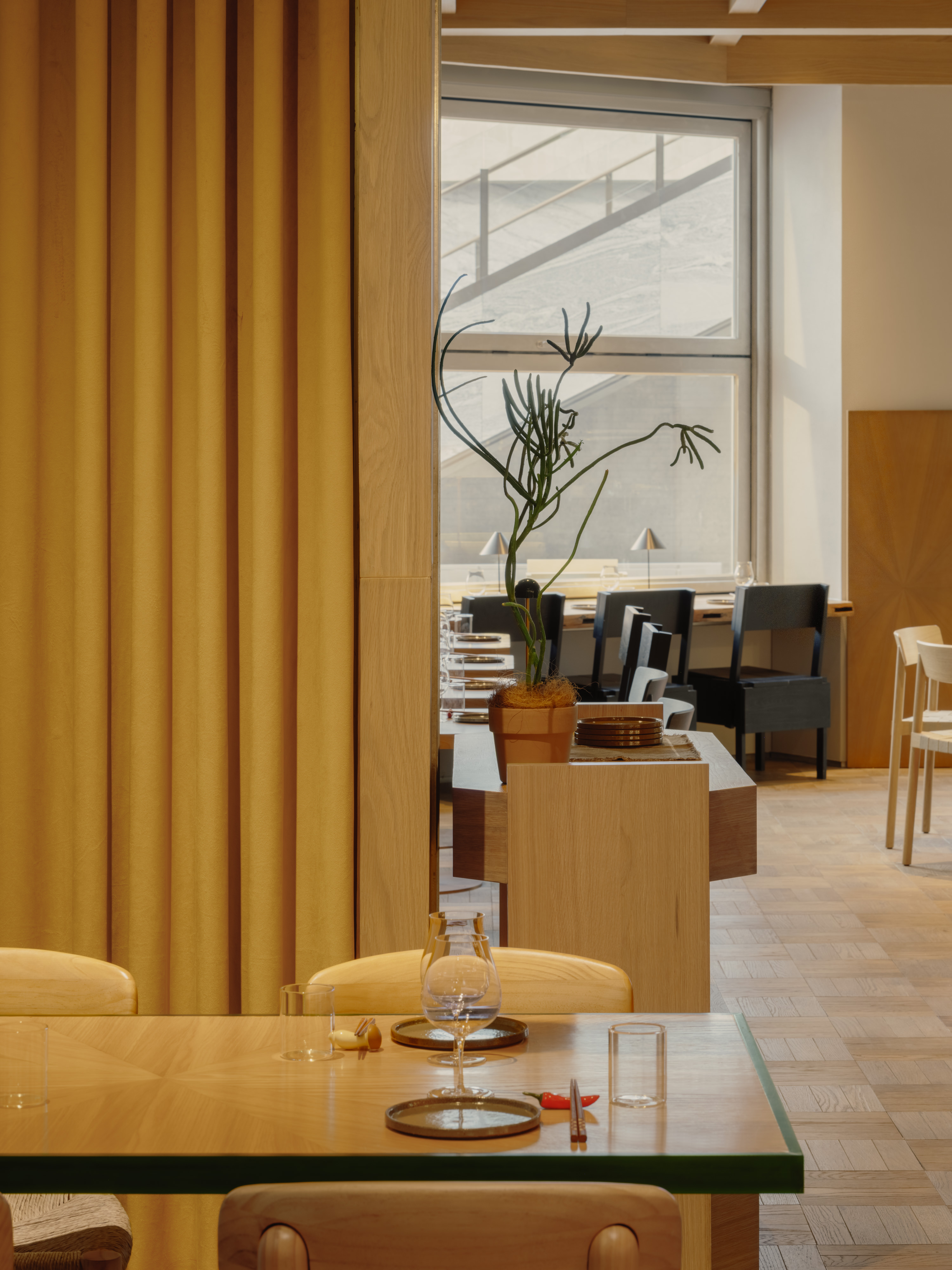
Furniture and lighting selections continue this dialogue between the known and the unexpected. Familiar references — including the GUBI Floor Lamp (often referred to as the “Chinese Hat”), GUBI Daumiller Side Chair, &Tradition Betty Chair, and Enzo Mari’s Autoprogetazione chair — provide a sense of material continuity and comfort.
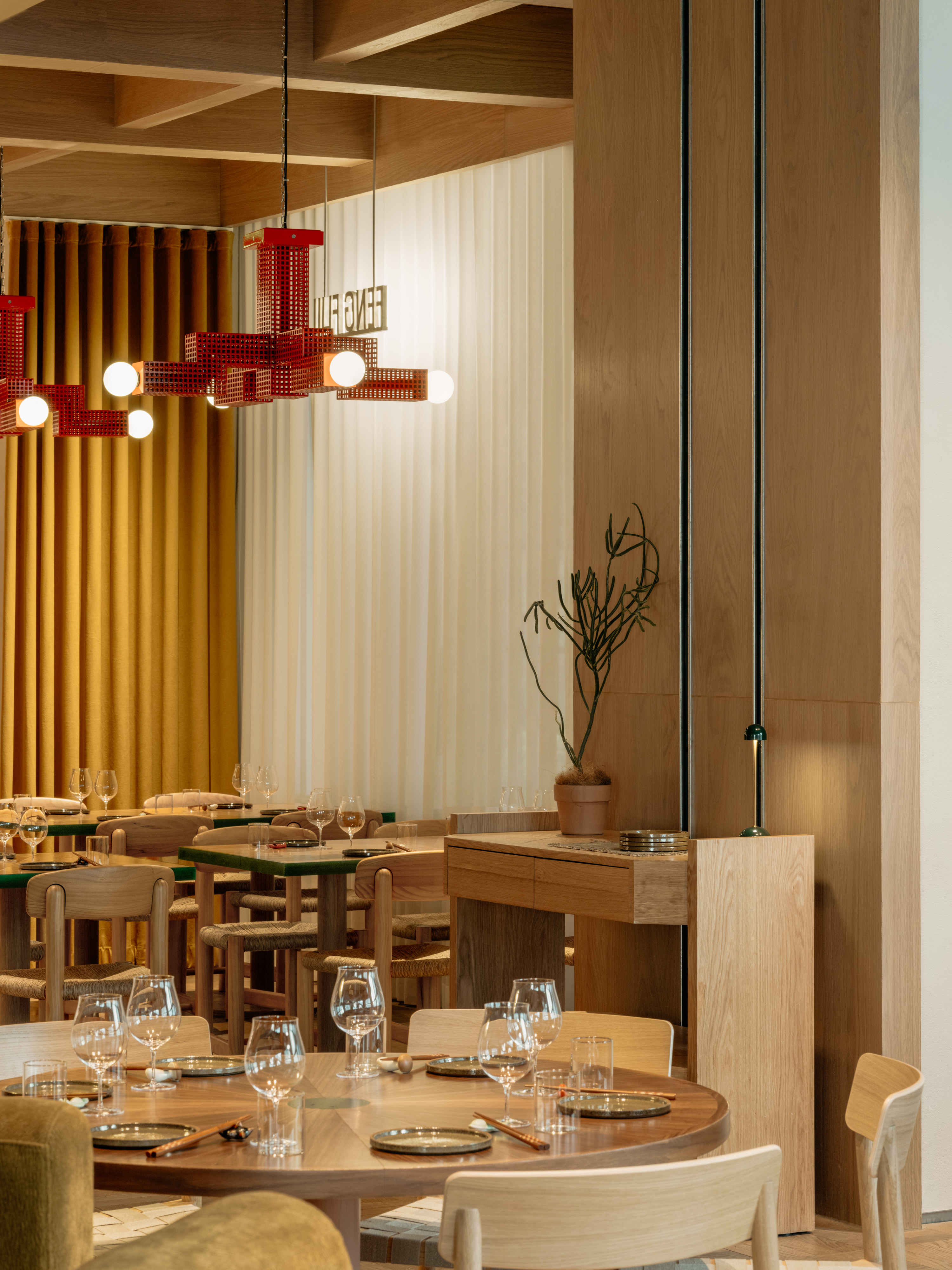
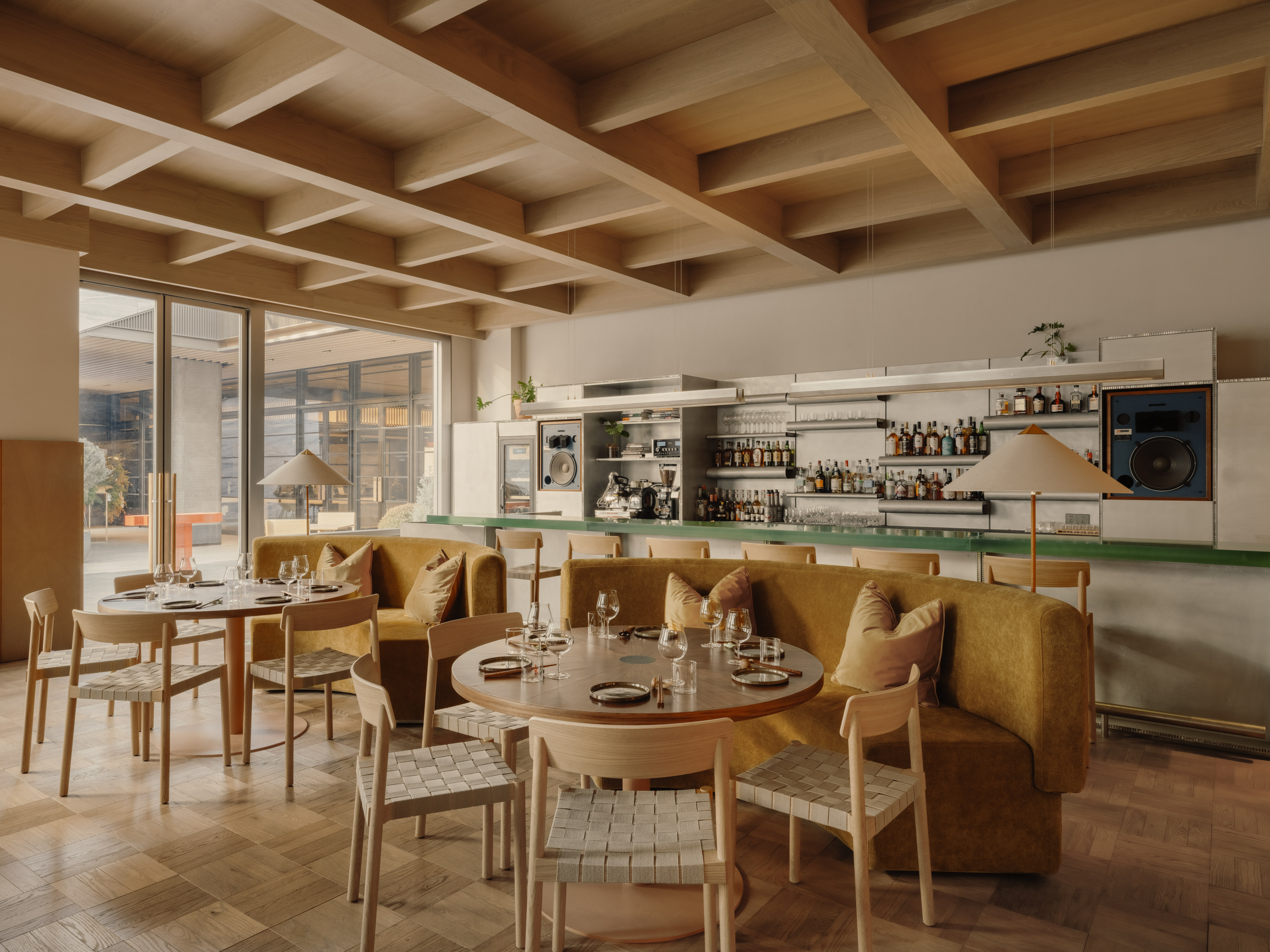
These are deliberately contrasted with more contemporary interventions: a cocktail bar cladded in honeycomb aluminium with emerald-green frosted acrylic countertop illuminated by Mario Tsai’s Song Pendants, and customed designed sunburst veneer dining tables highlighted by the sculptural Cosmo Chandelier by Mati Sipiora. At the mall-side entrance, a pastry counter references Lao Ding Feng’s origins, gently lit by four rows of handmade Cast Lamps from Resident by Philippe Malouin. Rather than operating as a separate retail gesture, it functions as a spatial threshold — a moment of recognition that bridges memory and reinvention while activating the restaurant beyond peak dining hours.
Between Harmony and Disruption
Colours are used with similar restraint. Warm oak tones, textured warm-grey plaster walls, parquet flooring, and timber furniture form a calm, cohesive backdrop. Against this neutrality, select elements are designed to stand apart: vivid green frosted table edges, metallic bar surfaces, wine and meat fridges cladded in pink glass, expressive pendants, and golden accents from Santa & Cole’s Lámina Dorada and mirrored walls. Much like the bright floral fabrics found in northeastern Chinese homes, these moments gently disrupt the visual order — expressive without becoming ornamental.
Within this restrained spatial language, they introduce a sense of grounded confidence and unapologetic directness — a quality that reflects both the spirit of the menu and the dining experience itself. The result is a space that feels welcoming without being polite, familiar without being predictable.