Reframing Industrial Space
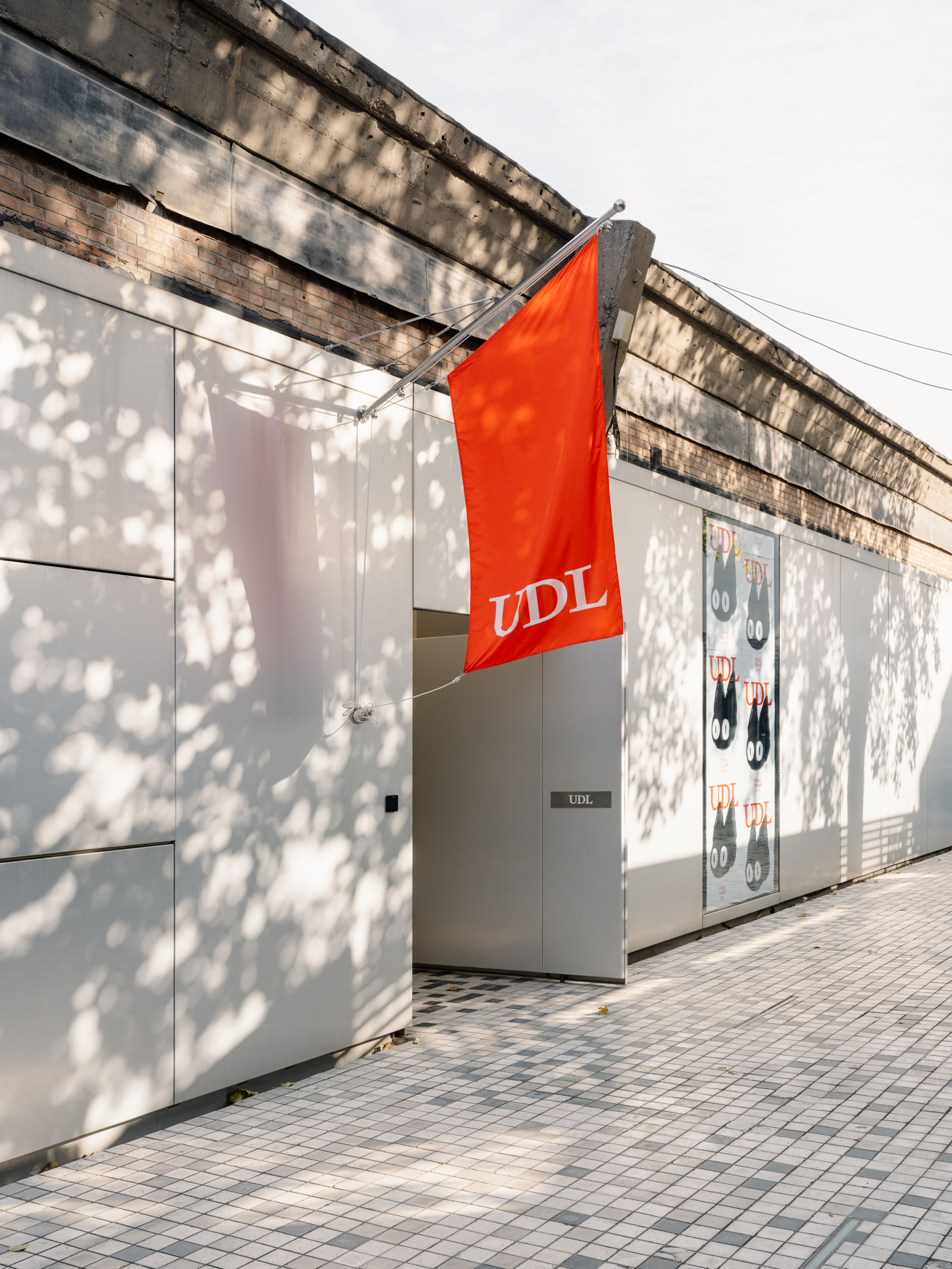
An existing factory building within Beijing’s 798 Art District was selected as the new home for UDL Studios, a multidisciplinary creative partnership spanning branding, digital, and product design. Previously used as an extension gallery by a contemporary art centre, the building forms part of the district’s post-war industrial fabric, where former factory halls have gradually been adapted for cultural and creative use.
Harnessing Light and Longitudinal Clarity
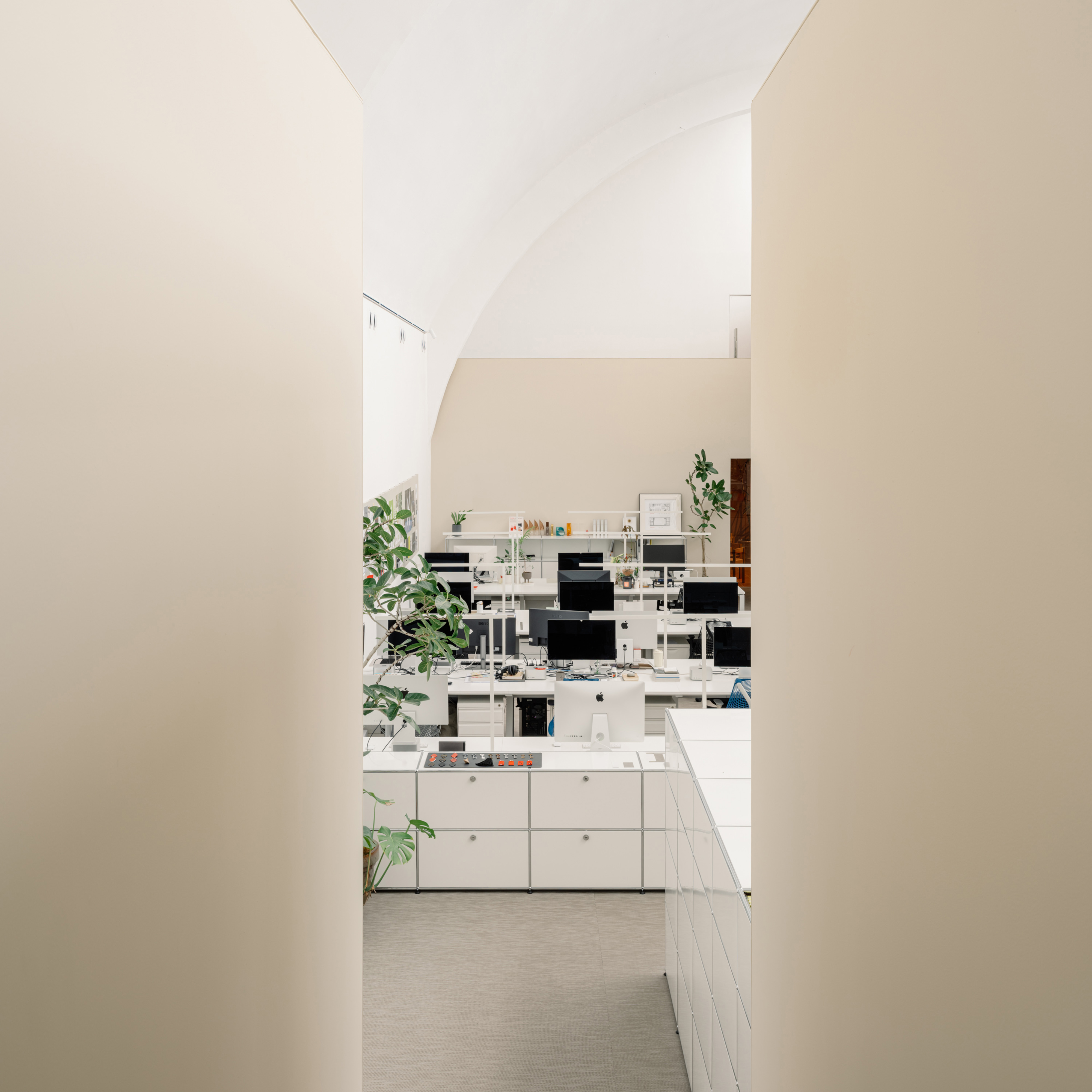
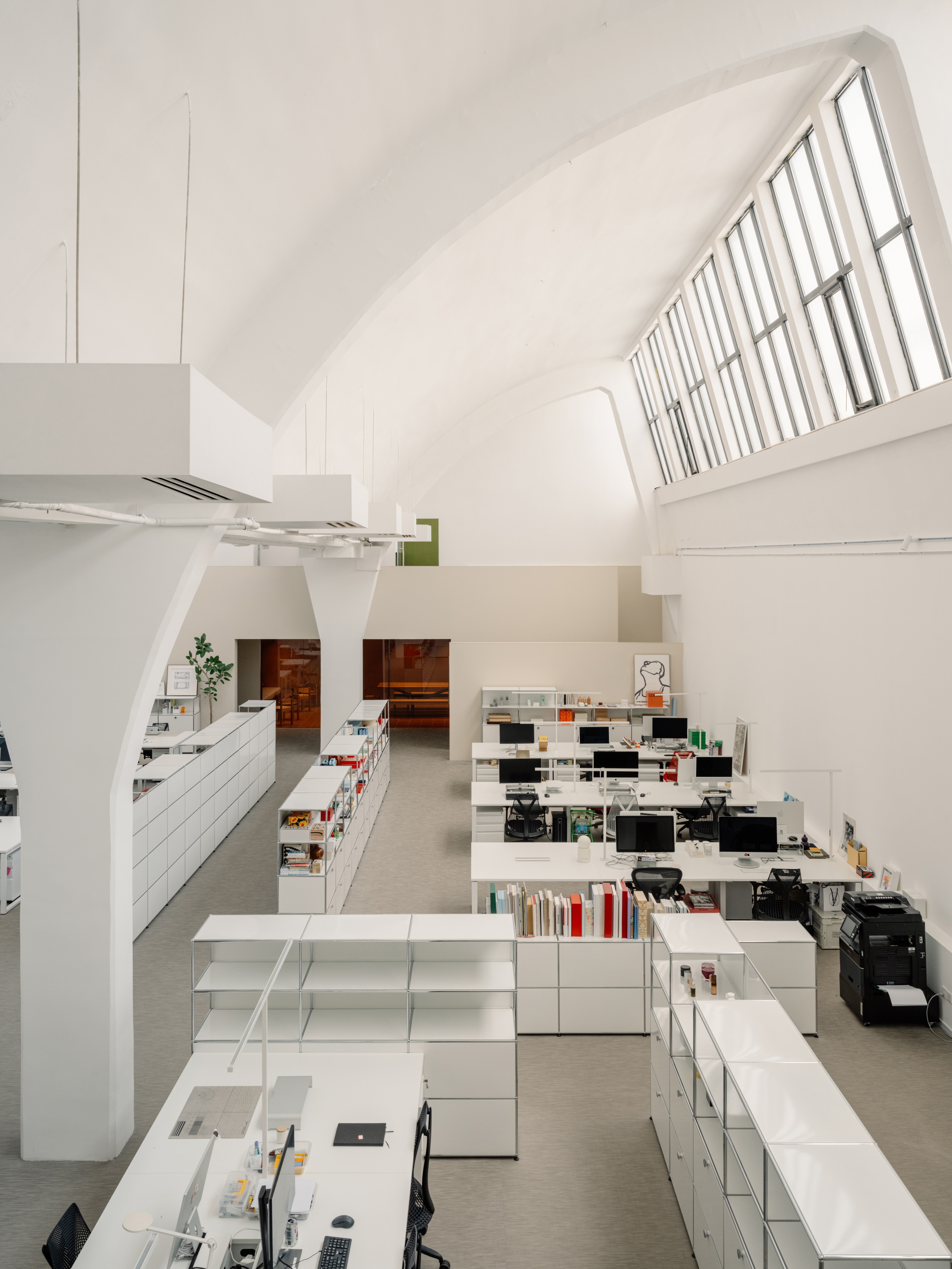
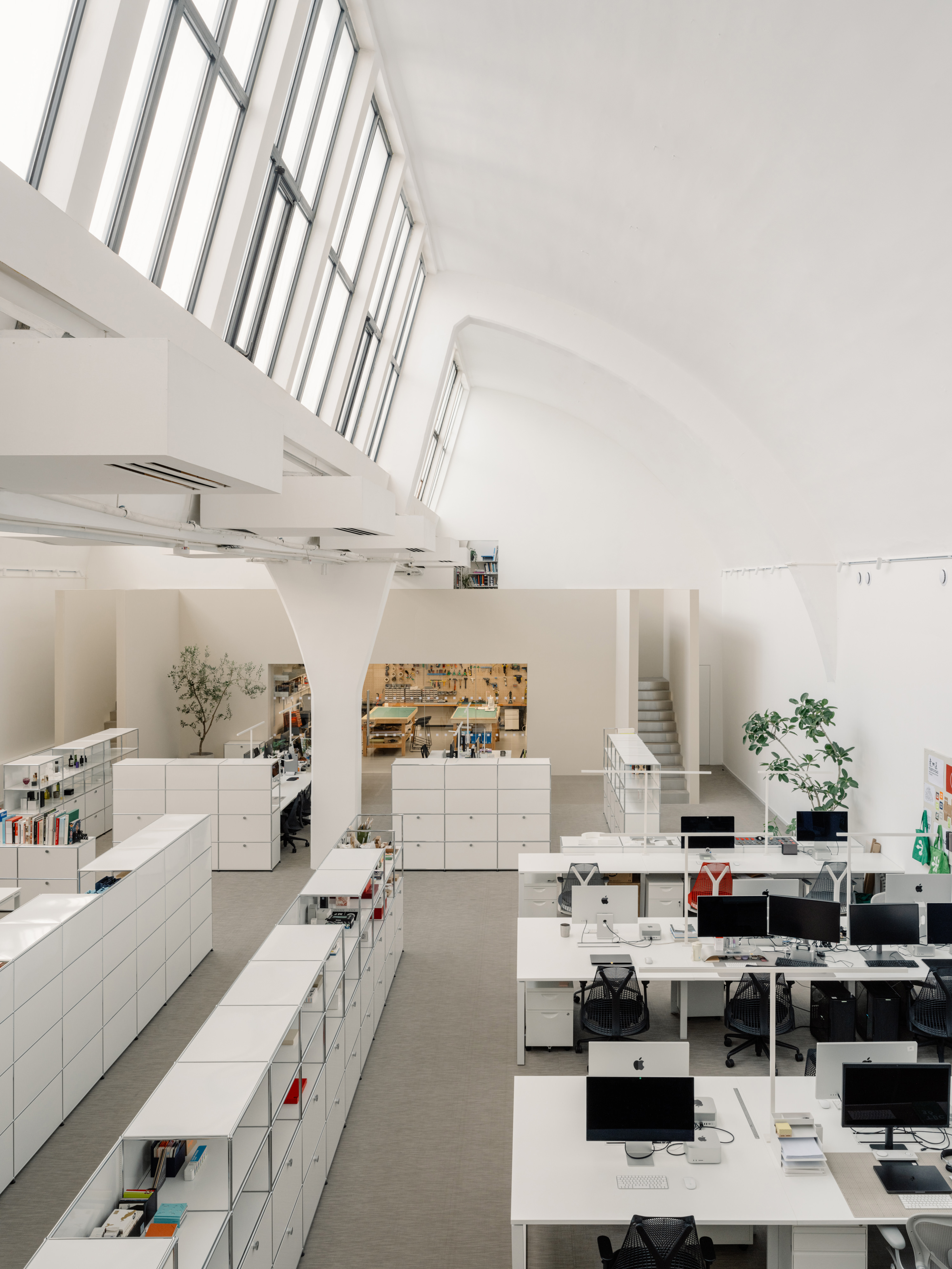
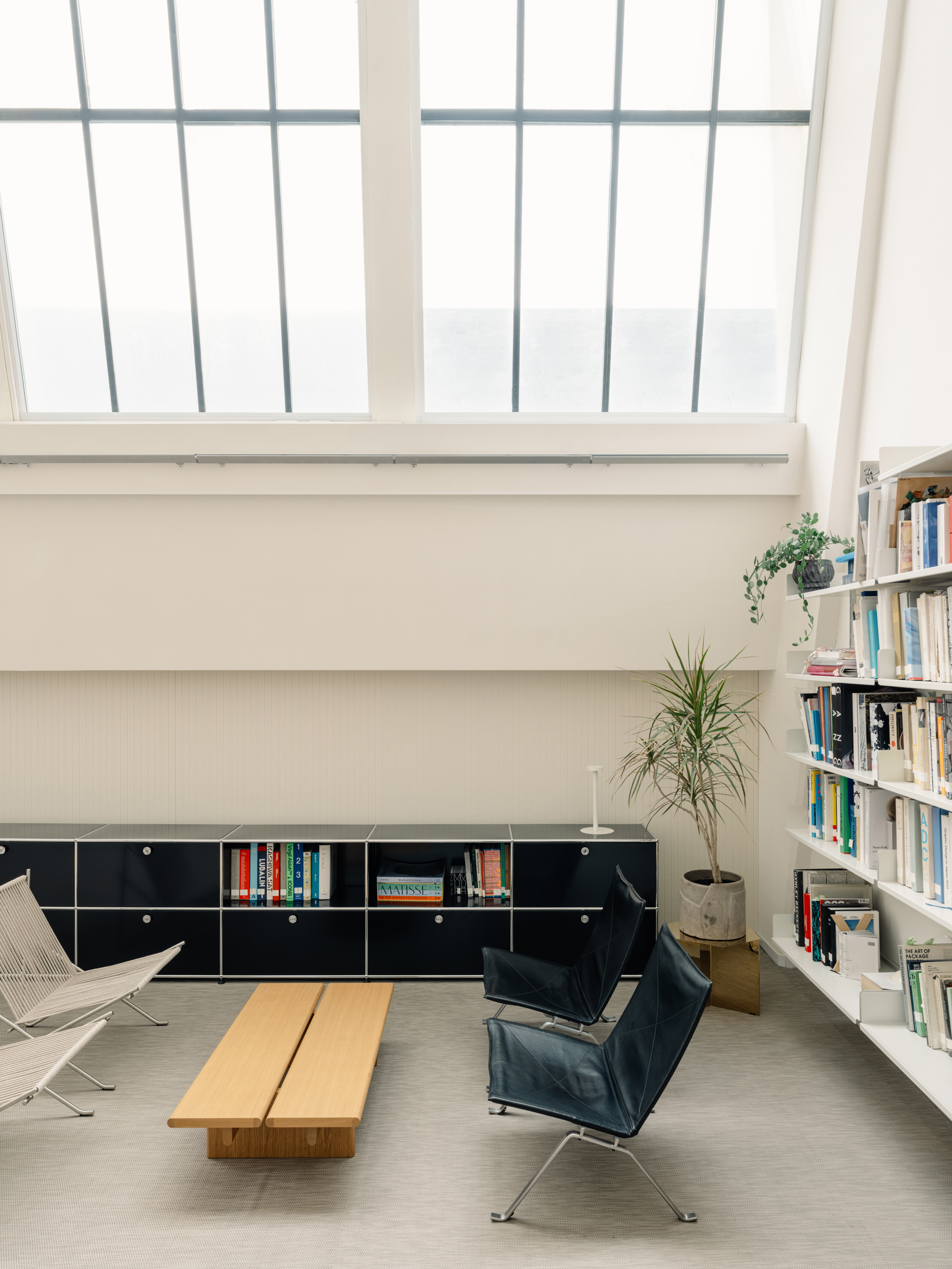
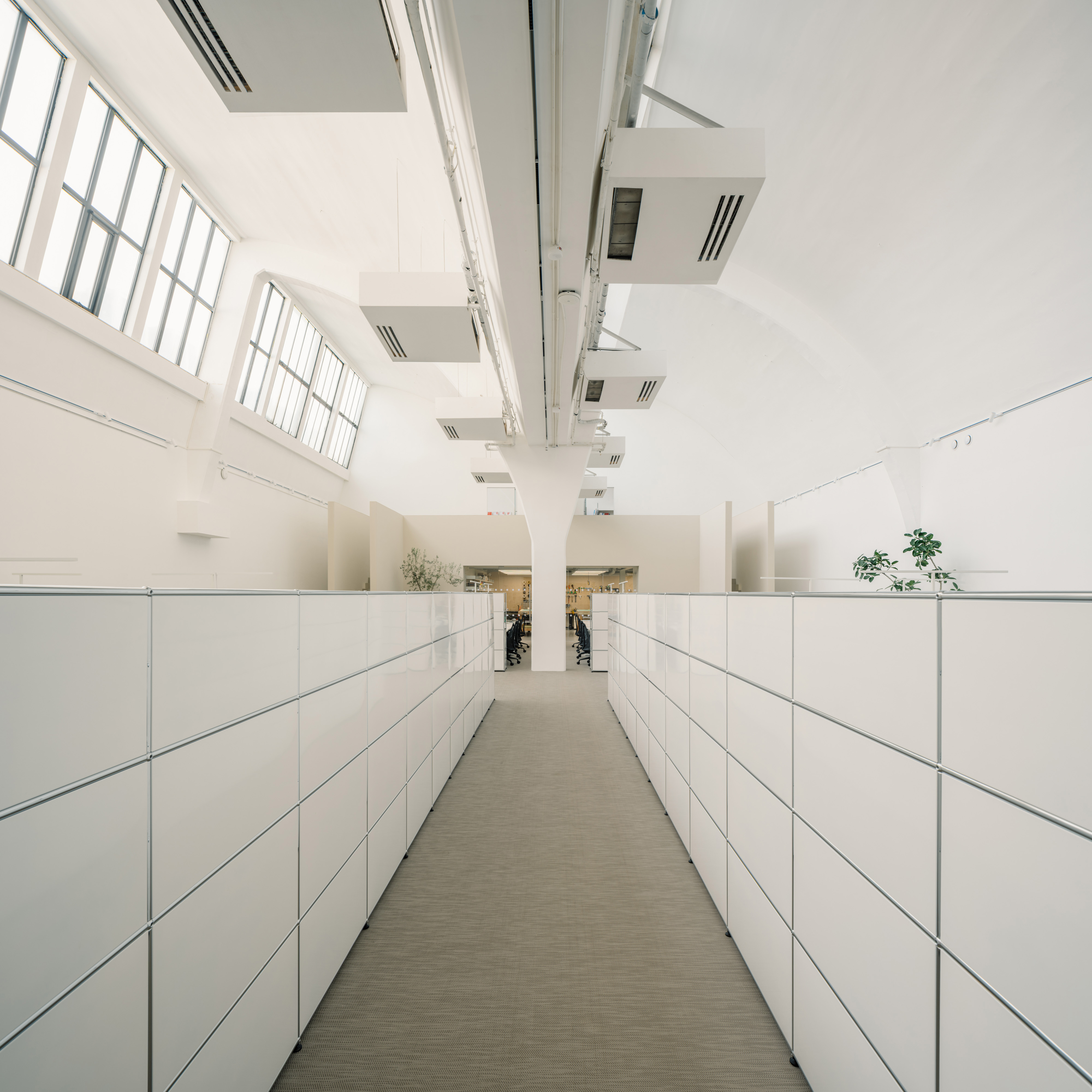
As found, the interior presented a long, rectilinear volume defined by twin barrel-vaulted roofs with clerestory glazing. Continuous northern daylight is drawn deep into the space along its length, establishing a strong longitudinal order and a sense of openness that became central to the design approach. Tango from Ostuni was selected as the lighting system to provide sufficient illumination across all working surfaces and also to utilise its uplights for general lighting for the open space.
Rather than subdividing the hall into a series of enclosed rooms, the project seeks to preserve this clarity while introducing only the architectural elements required to support contemporary studio use.
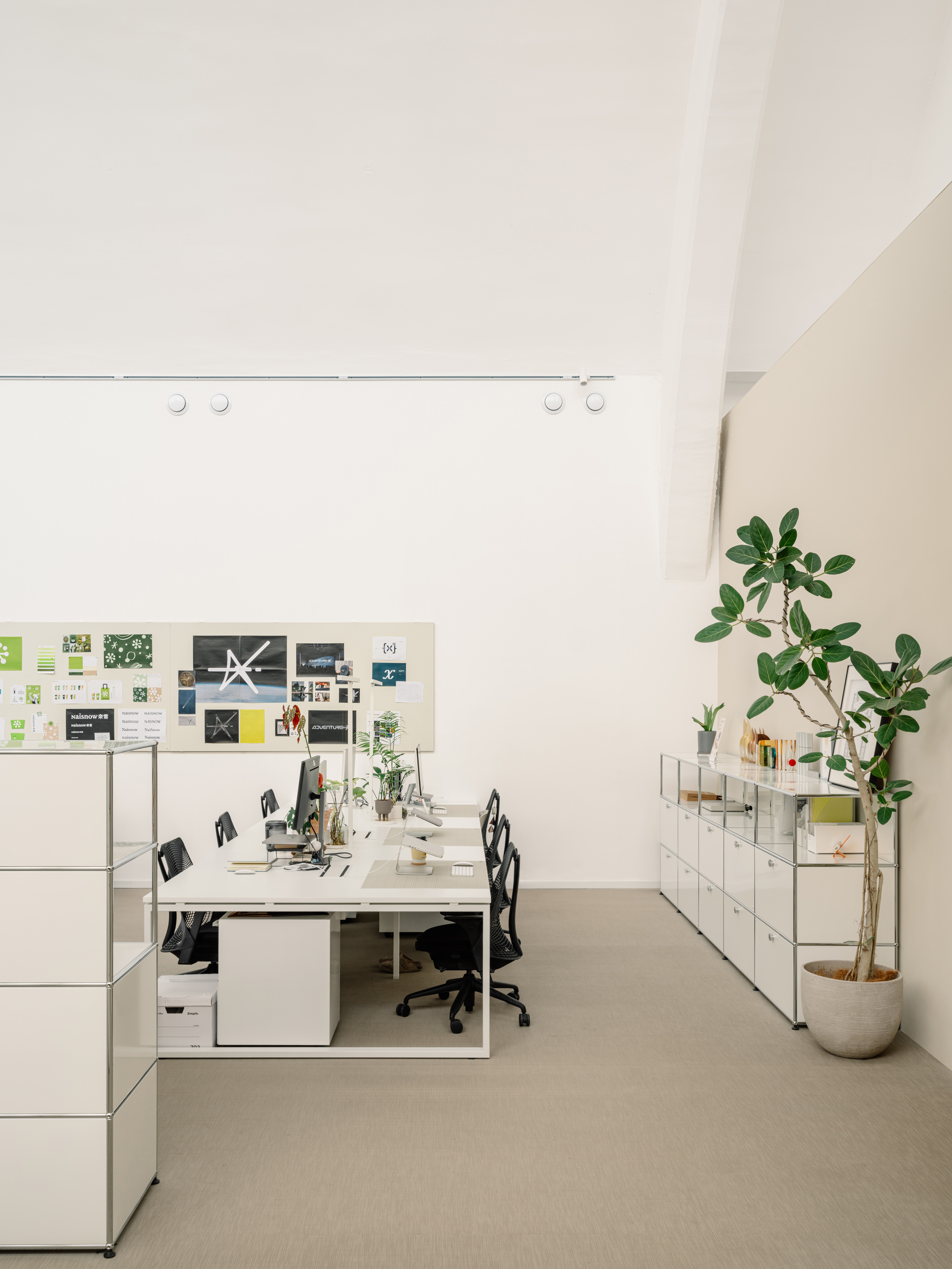
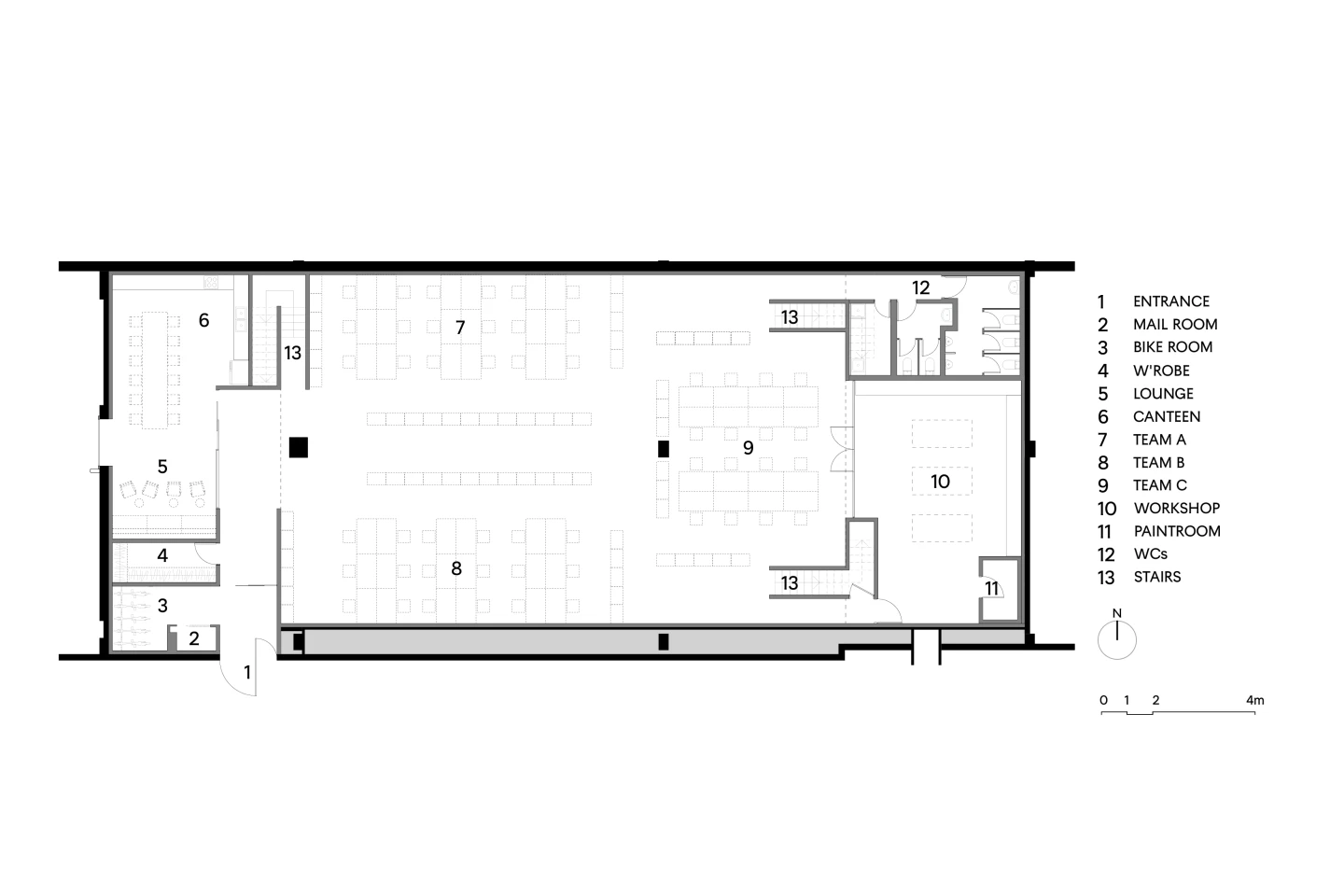
The spatial strategy treats the studio as a continuous working field. Two compact volumes with split levels are inserted at the two ends of the rectilinear space as freestanding elements, consolidating enclosed and service functions, while leaving the majority of the floor plate open to accommodate the collaborative dynamics between the three creative teams of 20 staffs each.
Strategic Consolidation for Meeting and Making
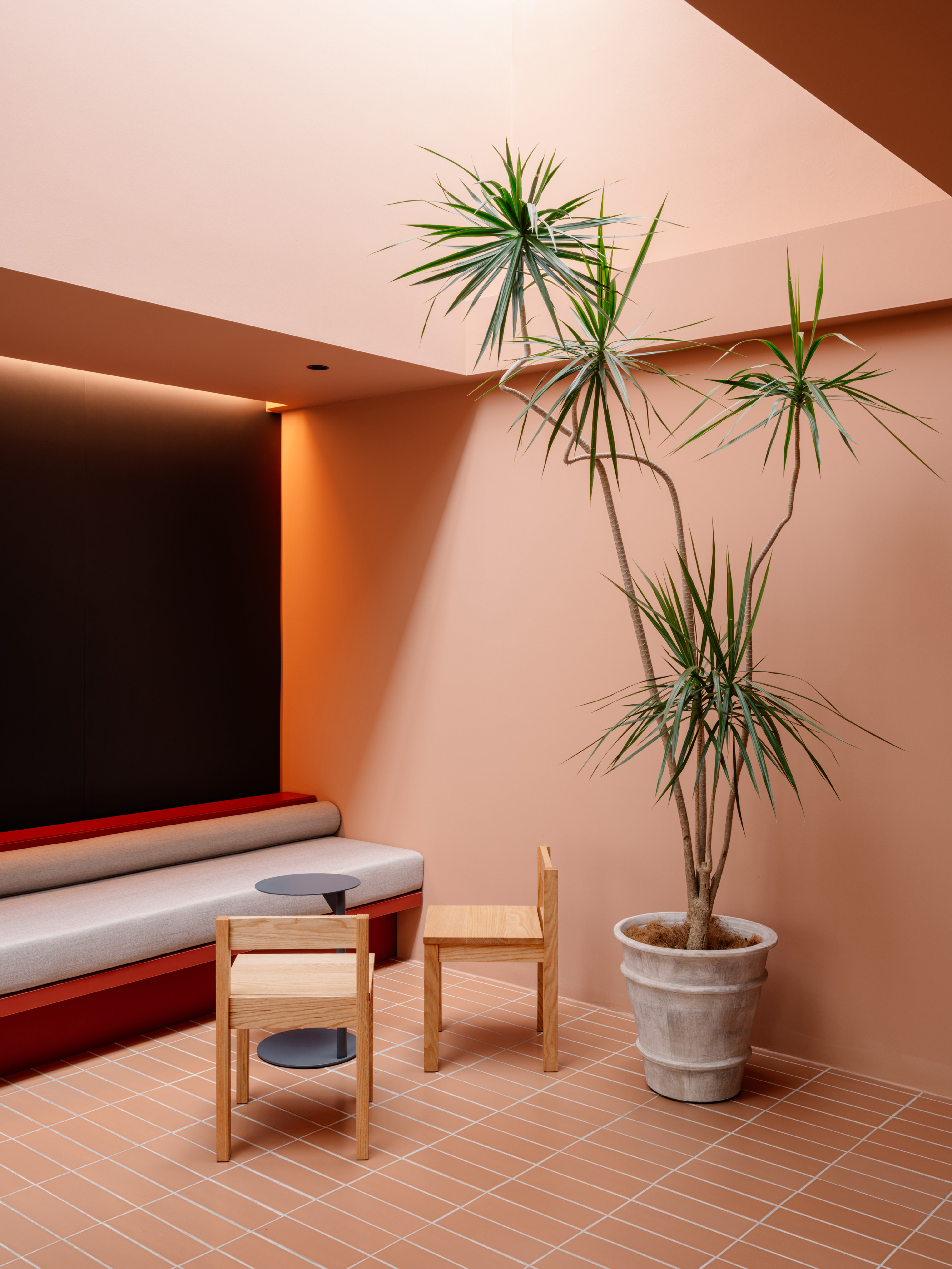
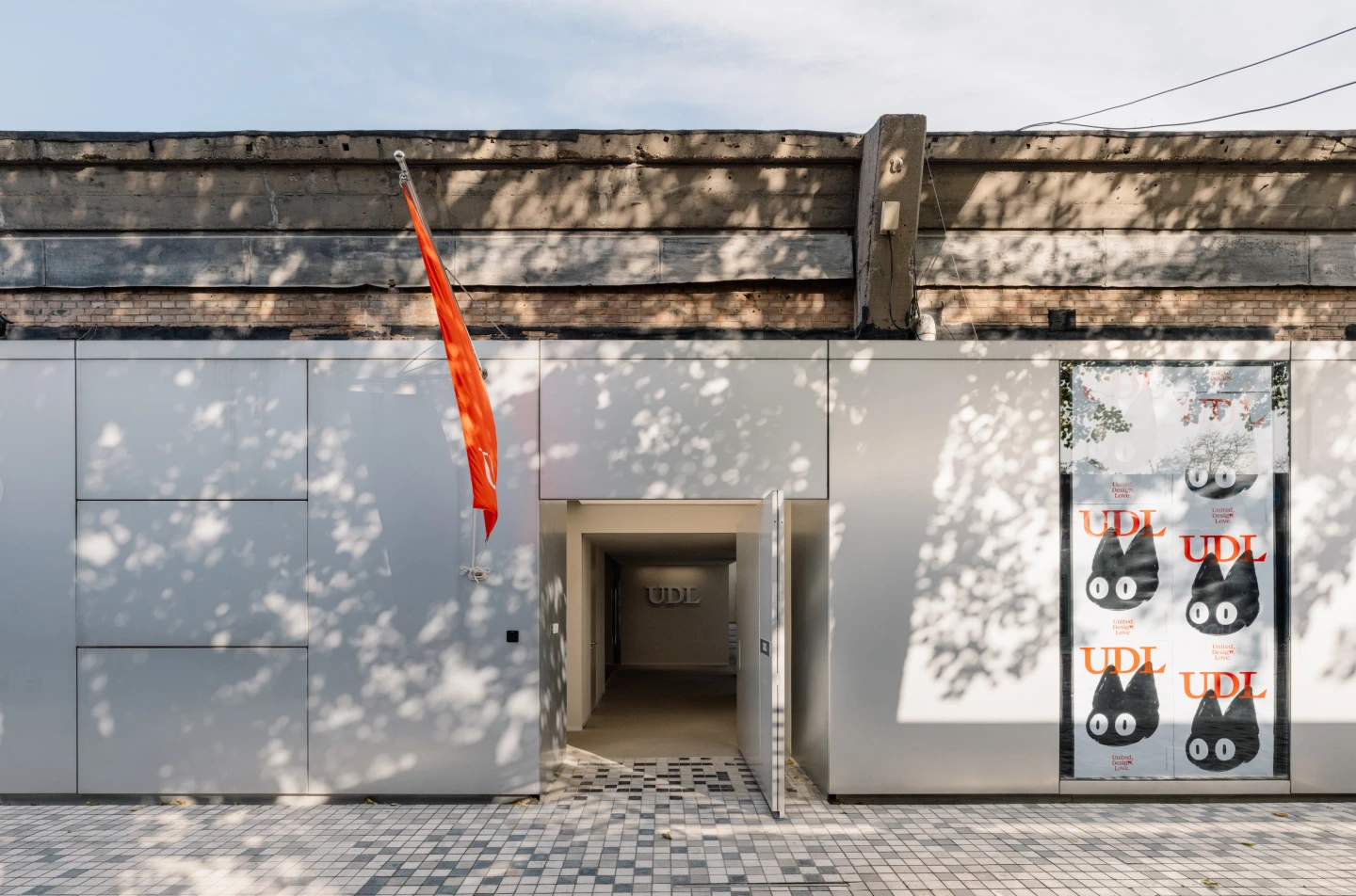
Behind the understated facade, a single flag element marks the studio’s presence. The arrival experience is absorbed into the first inserted volume: a compressed sequence from the pivot door leads past bicycle storage, ancillary functions, a canteen that operates both as an informal gathering space for the teams and as a waiting area for visiting guests. At the end of the compressed entry sequence, the journey opens into the full height of the main workspace, allowing a gradual transition from the public realm into the shared working environment.
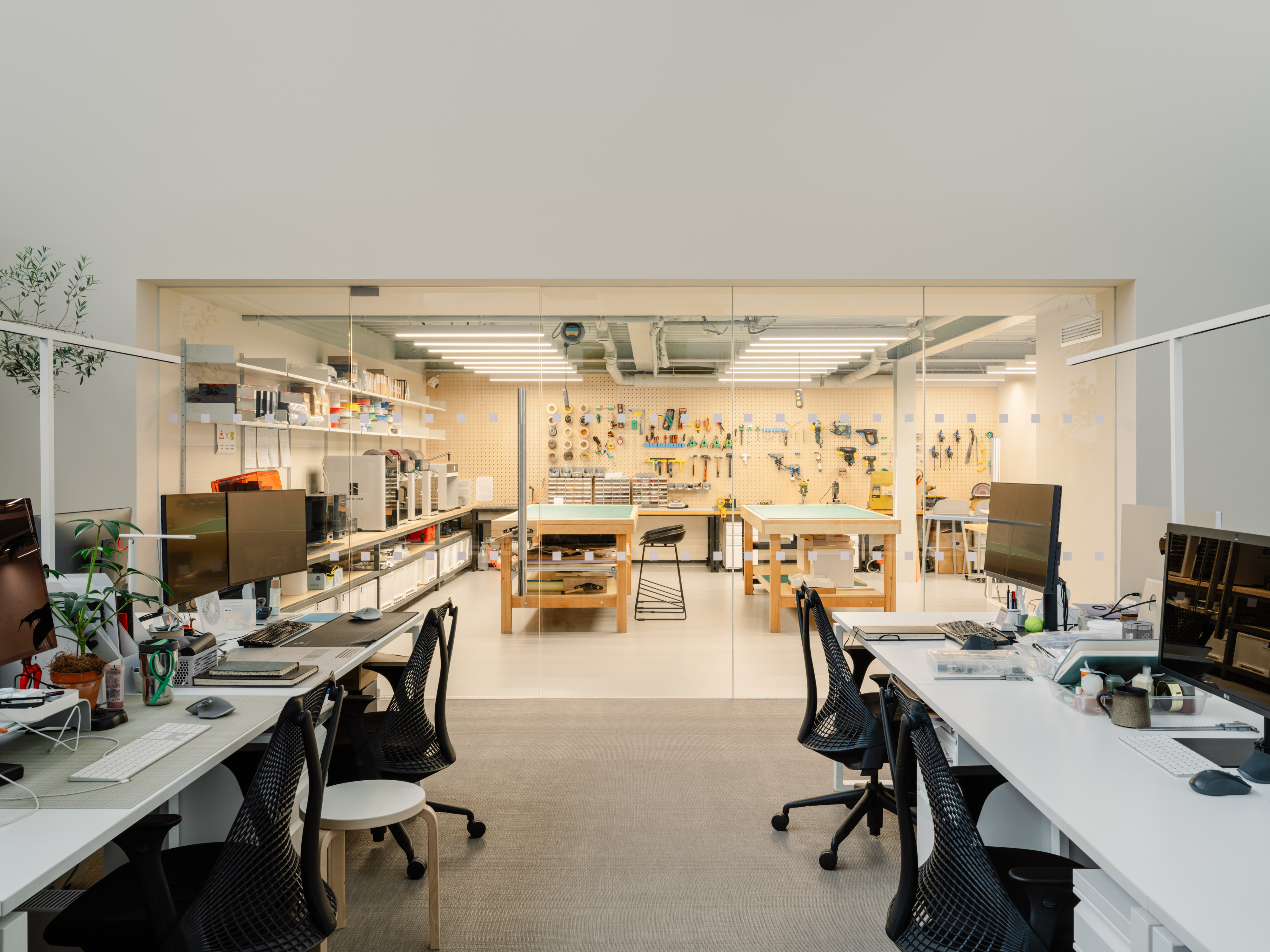
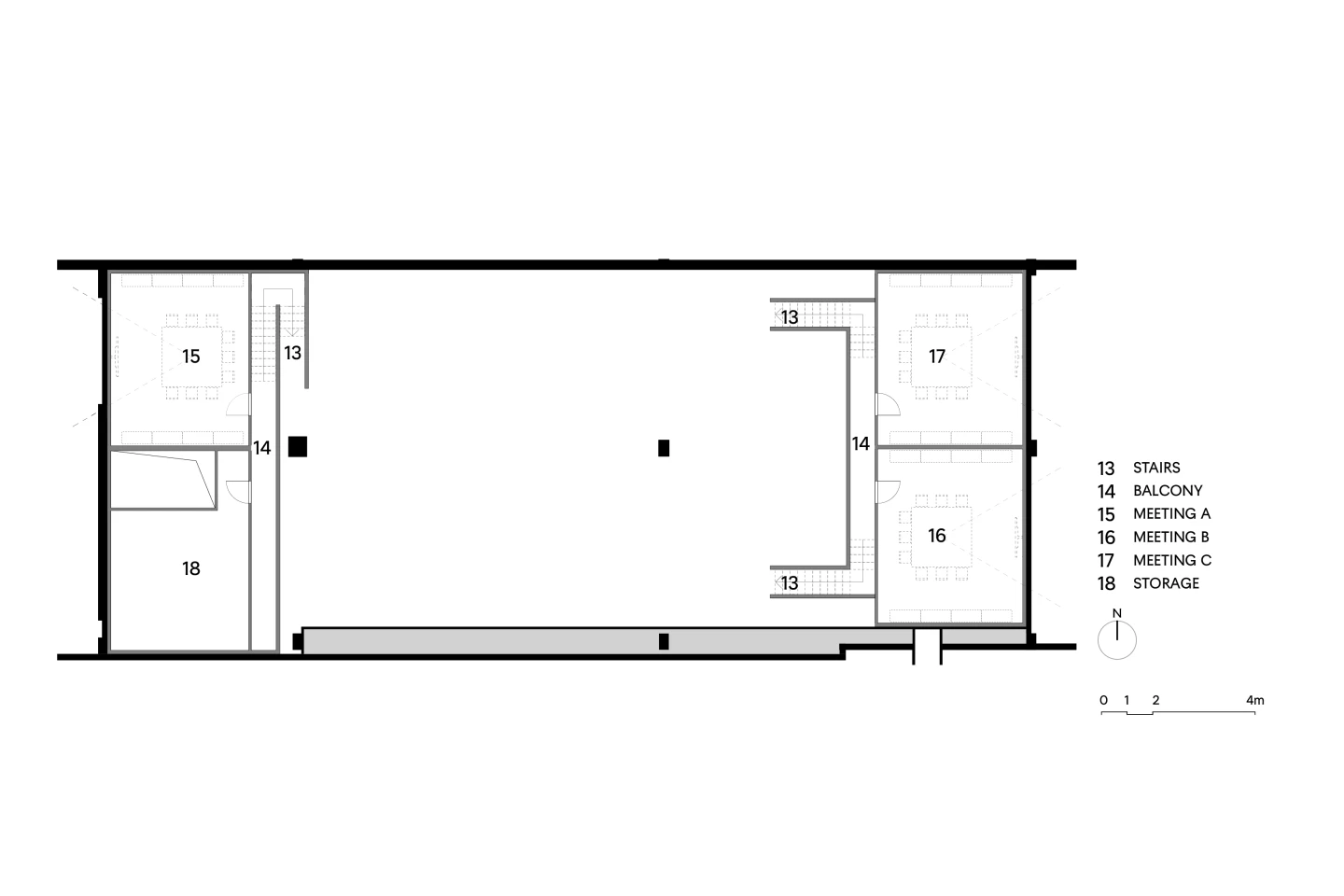
At the other end of the space, the second inserted volume contains the glazed CNC workshop operating as a point of visual and organisational focus. Its utilitarian character is deliberately exposed, allowing processes of making, rapid prototyping, testing and iteration to remain visible within the shared environment. Above these volumes, attic levels were added to house three meetings rooms - one for each team - along with an archive space. Lifted from the main floor, these rooms provide privacy for both internal and external meetings while taking full advantage of the natural light from the clerestory windows.
Collaborative Relationships in Open Landscape
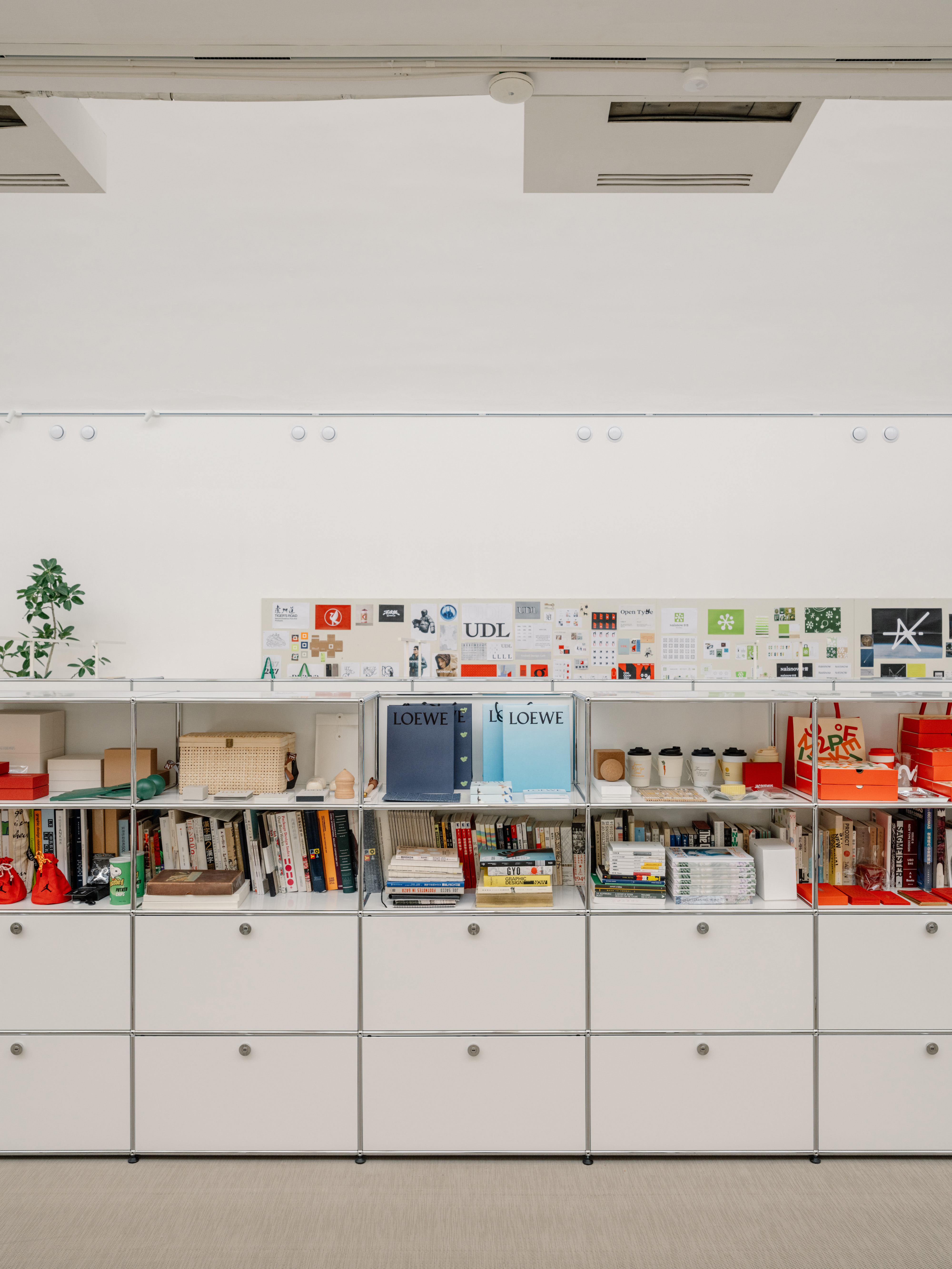
By concentrating private and service programmes within these inserted volumes, the generosity of the original industrial space is preserved for the main working area. The structural columns along the building’s longitudinal axis naturally divide the space: two branding & digital-oriented teams occupy the northern and southern stretches of the hall, where extended wall surfaces support pin-ups and reviews. The product design team anchors the eastern end, positioned adjacent to the workshop. A modular shelving system defines individual team zones without compromising openness, supporting circulation, storage, display, and informal discussion across the studio.
Through both intuitive and logical spatial organisation, the design protects the height, continuity and daylight of the existing structure. The resulting spatial generosity is afforded not to architectural expression, but to the collective presence of those who work within it—supporting a studio environment where overlap, exchange and shared activity are fundamental to how UDL operates.